Terry Deary
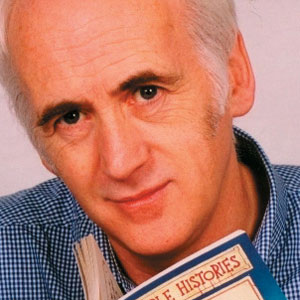
Where and when were you born?
I was born just after the war into slum housing in the north-east of England. My father's family originally came from Donegal to work in the shipyards of Sunderland.
What were you like at school?
I went to grammar school which was hideous because we were drilled to pass exams; we weren't introduced to literature, except as a sort of thing which we had to study in order to analyse and pass exams in. And when we were given essays to do, I was always about top of the class.
When did you know you wanted to be a writer?
It was just a natural ability I had and I never valued it. I became a professional actor and what I discovered was there were no plays written for the four actors in our company to use. We started to improvise and put them together but in the end, the company just turned to me and said: 'Terry, go away and write us a play.' And it was as natural as falling off a log.
What do you do in a typical day?
I always have a word target. I always try to write — if I'm writing scripts. I can write a radio or television script in two days: 30 minutes. I can write two thousand words a day non fiction. Fiction I can write eight thousand words a day. If I want to. I don't always want to, you know.
What's your favourite book - you can't choose one of your own!
The Napoleon of Notting Hill by G K Chesterton. I love thrillers. Murder mysteries. You know, the Agatha Christie era. And when I read non fiction, I like to read history — very boringly!
Where did you get the idea for Measly Middle Ages?
It came out of discussions with the publisher of Horrible Histories — at that time we wanted to focus on subjects that linked in strongly with the national curriculum, and the medieval period is one of those. It is now one of the top ten bestselling titles in the series.
Which person, living or dead, do you most admire, and why?
My dad. He died when I was 19 years old but he taught me how to play football — not to a very high level, but, you know, that was the height of his ambition. He died because he smoked 50 cigarettes a day, which in those days was not unremarkable.
What makes you proud?
I came from a very deprived, very working-class background. And it is extra difficult for people from that area to get on in any field. So now I'm an ambassador for Sunderland, where I was born. That's what makes me proud.
What's the most important lesson life has taught you?
In terms of writing, there is only one primary rule which is 'Writers don't matter. Readers matter.' I always always have the reader at the forefront of my mind. I always say 'I am writing for a real person' and I imagine them. If the reader is not engaged, they're not listening. When I've got their attention I can do something with them.
Even more online
Scholastic Children's Books
Terry Deary's House of Adventure