<?xml version="1.0" encoding="utf-8"?>
<feed xmlns="http://www.w3.org/2005/Atom">
    <title>read me</title>
    <link rel="alternate" type="text/html" href="http://intl.transitionelement.com/scholastic/read-me/" />
    <link rel="self" type="application/atom+xml" href="http://intl.transitionelement.com/scholastic/read-me/atom.xml" />
    <id>tag:intl.transitionelement.com,2007-07-16:/scholastic/read-me//1</id>
    <updated>2007-09-13T12:35:17Z</updated>
    
    <generator uri="http://www.sixapart.com/movabletype/">Movable Type Publishing Platform 4.01-beta1</generator>

<entry>
    <title> Daisy and the Trouble With Life</title>
    <link rel="alternate" type="text/html" href="http://intl.transitionelement.com/scholastic/read-me/2007/09/_daisy_and_the_trouble_with_li.html" />
    <id>tag:intl.transitionelement.com,2007:/scholastic/read-me//1.29</id>

    <published>2007-09-03T15:02:35Z</published>
    <updated>2007-09-13T12:35:17Z</updated>

    <summary>Strap: read me your reviews All Daisy fans will be racing to the bookshelves, elbowing others out of their way, eager to spend more time with their alternative heroine, Daisy. With the arrival of this new title in the series,...</summary>
    <author>
        <name>Claire Dowse</name>
        
    </author>
    
    
    <content type="html" xml:lang="en" xml:base="http://intl.transitionelement.com/scholastic/read-me/">
        Strap: read me your reviews

p(intro). All Daisy fans will be racing to the bookshelves, elbowing others out of their way, eager to spend more time with their alternative heroine, Daisy. With the arrival of this new title in the series, children will relish the chance to share Daisy&apos;s musings on the Trouble with Life!

        
On the Official Daisy Club website (www.daisyclub.co.uk) Daisy tells us &apos;Hi I&apos;m Daisy. I don&apos;t like peas but I love strawberry dib-dabs and crunchy creams and jumping in puddles and skidding on ice and hanging upside-down from swings with my best friend Gabby!!!&apos; 
So, even if you haven&apos;t had the pleasure of meeting the inimitable Daisy in her previous books, you can form a picture of the strong-minded, fun-loving, bright little tomboy who has become a favourite of thousands of children.
Kes Gray&apos;s first book about Daisy, Eat Your Peas, became an instant hit for the father of three who aspires to be Captain Scarlett. His deadpan humour combined with the illustrative skill of Master of the Trade, Nick Sharratt, produced a picture book that was quickly recognised as a leader in the field. Eat Your Peas quickly accrued numerous awards, including the overall prize in the Federation of Children&apos;s Book Awards, and was shortlisted for the Blue Peter Book Award in 2002.
Since then, Daisy has been in all sorts of predicaments (such as the horror of being a bridesmaid in Yuk!: she doesn&apos;t do dresses and she doesn&apos;t do lovely) and trouble (such as convincing the babysitter that she usually has chips and ice-cream for tea and never has a bath before bed in Double Trouble). She may challenge her Mum (in You Do! Mum tells Daisy not to pick her nose, Daisy retorts with a story about the time Mum did on the way to Granny&apos;s - you can guess the refrain!) but she&apos;s always lovable and always fun. In 006 and a bit Daisy and best friend Gabby become spies extraordinaire. As Daisy dons a black felt-tipped pen moustache and dark glasses, readers just know that there will be pages of great secret spy action to follow.
In the latest book Daisy has grown up a bit. The writing is now in the first person and Daisy&apos;s character is developing. Kes tells us &apos;I&apos;ve really enjoyed writing this first fiction story about Daisy (the earlier stories are picture books). Daisy is really developing into a little girl with strong opinions, I think I imagine her as a very young Vicky Pollard. She just rambles on, she&apos;s a non-stop motor-mouth who pings off in different directions - but children are just like that! It&apos;s very handy having a six-year-old daughter and her friends around. I just listen and watch a lot! 
&apos;I also have a very good memory of my own childhood - in fact, the idea behind Daisy&apos;s &apos;main trouble&apos; sprang from a memory of something I did as a kid. I remember always being desperate for sweets, all the time. We used to go down to the local shops and I was always on the lookout for any dropped coins on the floor so that I could buy some sweets. One day I saw one of those big, round lollies on the ground. It was half sucked but it was my only option. I picked it up and ate it. The next day I was so ill! I remember vividly not being able to have my favourite tea - steak and kidney pudding - and not being able to play in a football match with my mates. It was awful but it provided the inspiration for Daisy&apos;s trouble.&apos; 
This gives you a clue as to why Daisy has been grounded and why she has lots of time to pontificate about all her troubles. Children will enjoy bemoaning with Daisy all the problems they share, for example, the trouble with comics - they only have a free gift on the cover, the trouble with being silly -  it can give you scabs, the trouble with remote control cars - they don&apos;t do as they are told. 
And, readers will be pleased to know, there are lots more of Daisy&apos;s troubles to come! Kes tells us &apos;I&apos;ve has just sent off the next book, Daisy and the Trouble with Zoos, to the publisher - and there are two more to come.&apos; Daisy fans will be delighted!

[images: 
* Kes Gray (NB A new photo is on its way from Kes)
* cover of Trouble with Life
* inside images from Trouble with Life:
p36 Daisy on the loo 
p53 mum shouting 
p177 Daisy eating
* covers of other titles? Eat Your Peas/ Yuk! Double Trouble/ Bunch of Daisies/ You Do! / 006 and a bit]

Publishers would like to add a link to the Daisy website - is this possible??

Daisy and the Trouble With Life by Kes Gray 
YOUR REVIEWS

Characters:
Daisy - A young girl who is quite impulsive and funny.
Daisy&apos;s Mum - A normal mum: always nagging.
Gabby - Daisy&apos;s best friend.

The story:
Daisy&apos;s grounded. She&apos;s lucky she&apos;s even allowed out of her bedroom after what she&apos;s done. But what has she done that is soooooooooo bad?

My review:
I thought Daisy and the Trouble with Life was hilarious. I liked the way it was written in first person, this made me feel that Daisy was a real girl.  
Daisy and Gabby are in a secret club which causes lots of trouble such as: cleaning the car with bubble bath, digging a trap for next doors cat and cutting Gabby&apos;s hair so Gabby was half bald.
Daisy&apos;s Dad died when Daisy was little and Daisy wonders what her dad was like and if he would moan as much as her Mum. Daisy is scared of growing up because she thinks she will forget what her Dad was like, maybe this is why she&apos;s so naughty ?.
I really enjoyed Daisy and the Trouble with Life and I would love to be Daisy&apos;s friend because she seems kind and mischievous.

By Emily Board, aged 8         

 
Emily 

I liked the book but I thought that Daisy was a bit negative. She kept finding the trouble with everything, but this was mostly funny. I think that it should have said about her Dad dying at the beginning of the book because I was wondering where he was and it was a real surprise to read about it half way through. I think that it should have said how he died because suddenly my mind whizzed up with questions and I felt sad about her not having a Dad.
I liked the way Daisy was so imaginative with her &apos;the trouble with this&apos; and &apos;the trouble with that&apos;.  My favourite &apos;trouble with&apos; was the trouble with lolly sticks. Daisy said the problem with these was that people do not know how to make sticks and they should make them edible. I absolutely agree with her on that one.
Daisy&apos;s mum was always grounding her for different reasons but for some reason most of what Daisy does seems to go wrong!
The only bad thing about this story was that some things she described sounded so interesting that I wanted to hear more about them than was in the book.
Summary:
This book was about a girl called Daisy and her mother, and sadly her Dad had died.  She had a best mate called Gabby and they were always mucking around. Daisy&apos;s mother has to ground her a lot, not because she&apos;s mean and horrible but because Daisy is always getting into trouble. Daisy has lots of friends and tells us about some dreadful things she has been through. One day Gabby and Daisy decided to make a mud trap for Tiptoes the next-door neighbours cat. Mum grounded her for that. One day Daisy did an absolutely awful thing, but I am not going to tell you about that because you&apos;ve got to read the book to find out!!!!
by Ruby Bookbinder, aged 8


Ruby


Another exciting book in the series! Daisy&apos;s view on the world and life in general is very amusing... the whole world is against her and everything is unfair. As a teacher this sounds very familiar as many children share these views, although maybe not to the extent that Daisy does! I found it very funny especially when Daisy thought being grounded was boring, well what did she expect? Well - she wasn&apos;t expecting to have an upset stomach! Children will love this book, what child doesn&apos;t love a story with the main character running off to the loo! The book is filled with some great characters that children will love from her pet goldfish, to her friend Gabby to the school bully, there is something for everyone. This is definitely a book that will be on my class bookshelf and in the school library. 
Miss Shona Sivam
Class teacher, Burlington Junior School


This is a fiction story book about a girl called Daisy. She has been grounded and has to stay inside for a day. She tells you about how she can&apos;t go out to play with her best friend Gabby. They want to dig a big ditch out of mud and sticks, because they want the next door neighbour&apos;s annoying cat, called Tiptoes, to fall in. They dug a small ditch before, but Tiptoes didn&apos;t fall in it. In the story Daisy tells you about her life and then towards the end of the story, she tells you why she has been grounded. You also meet Fred her goldfish and her other friend.
This is a suitable book for boys and girls aged 7-9 years. I think it would be good if you had just been grounded, because you would feel just like Daisy. I found the book exciting to read, because you have to wait to find out what Daisy has done wrong and why she has been grounded. I would recommend this book
 
Sarah Langford, aged 8

    </content>
</entry>

<entry>
    <title> If you weren&apos;t a children&apos;s book writer what would you like to be?</title>
    <link rel="alternate" type="text/html" href="http://intl.transitionelement.com/scholastic/read-me/2007/09/_if_you_werent_a_childrens_boo.html" />
    <id>tag:intl.transitionelement.com,2007:/scholastic/read-me//1.28</id>

    <published>2007-09-03T15:00:31Z</published>
    <updated>2007-09-13T12:36:05Z</updated>

    <summary>Strap: Your questions answered...</summary>
    <author>
        <name>Claire Dowse</name>
        
    </author>
    
    
    <content type="html" xml:lang="en" xml:base="http://intl.transitionelement.com/scholastic/read-me/">
        Strap: Your questions answered

        
I&apos;ve always thought I&apos;d like to be
A fearless trekker wandering free
With countries to explore.
I&apos;d travel far in foreign lands
Shake famous people by the hand
In Timbuktu and Samarkand
And sail the oceans o&apos;er.
 
But there&apos;s another way to roam
I do not have to leave my home
No passport would I need.
I&apos;ll find a place no one will look
Then, curled up quiet in my cosy nook
I&apos;ll open up a story book.
And read, and read, and read.

Theresa Breslin 
photo credit: John Wilson: Bellshill.
Theresa&apos;s book Magic Factory: Trick or Treat is £3.99 on the Reading Alone case.

When I was really young, I always loved fishing and being in the sea. Someone told me I should be a marine biologist. I thought that sounded really cool. However, that never quite got off the ground. Then, when I was a bit older, I realised that practically the whole of my family were lawyers. I assumed that was what I would turn out to be too. It was only when I realised that I didn&apos;t find it very interesting that I was going to have to find something else! That&apos;s where the writing came in...
Dan Freedman
Dan&apos;s book Kick Off is a Scholastic Book Fairs exclusive at £4.99 on the Read On case.
When I was younger I seriously considered trying to go into acting and theatre. I was also quite a good folk-blues singer and guitarist across my teens and could probably have lived in that world (of Steeleye Span and so on) as a member of a band. But now, well, I&apos;m 56, so it&apos;s late to be starting another career. But if I couldn&apos;t be a children&apos;s book writer I&apos;d probably take early retirement, though I&apos;d still write poems as a serious hobby. And I might do voluntary work teaching children to read and maybe become a counsellor, helping people to sort out their problems for themselves. And I&apos;d make time to read a lot as well. 
Tony Mitton
Tony&apos;s book Party Animals is a Scholastic Book Fairs exclusive at £4.99 on the Welcome to Reading case.
 
I have wanted all my life to be an actor. Both my mum and dad were actors, so was my brother. I was in some school plays and was always too nervous to do it well. I acted the fool quite well - I loved getting the laughs, I suppose. I also found I liked pretending to be someone else. But I never dared take the risk of trying to become a real actor - I wish I had.
But then, later on, and by accident almost, I found I was the next best thing, a storyteller. I discovered I could become the people in my stories, go where they went, feel what they felt - just as actors have to when they climb into their parts and become a character. So I could have been Robert Redford, or James Stewart, Leonardo de Caprio, or Johnny Depp - but maybe I&apos;ve discovered a way to be me and a bit of an actor at the same - which is much better.
Michael Morpurgo
Michael&apos;s book Best Mate is £4.99 on the Read On case.

    </content>
</entry>

<entry>
    <title>Local inspiration</title>
    <link rel="alternate" type="text/html" href="http://intl.transitionelement.com/scholastic/read-me/2007/09/local_inspiration.html" />
    <id>tag:intl.transitionelement.com,2007:/scholastic/read-me//1.27</id>

    <published>2007-09-03T14:58:54Z</published>
    <updated>2007-09-13T12:38:27Z</updated>

    <summary>Strap: read me steps to success A tiny rural school in deepest Wiltshire provides the setting for a buzzing Book Fair with an international flavour...</summary>
    <author>
        <name>Claire Dowse</name>
        
    </author>
    
    
    <content type="html" xml:lang="en" xml:base="http://intl.transitionelement.com/scholastic/read-me/">
        Strap: read me steps to success


p(intro). A tiny rural school in deepest Wiltshire provides the setting for a buzzing Book Fair with an international flavour

        
As you approach the village of Sutton Veny in Wiltshire you might imagine you&apos;ve just taken a ride on the Tardis, back in time a century or so. Surrounded by lush green countryside, it is steeped in history from the White Horse in the hills - thought to have been first created in 878AD to celebrate Alfred defeating the Danes - to the church dating back to before 1240. But arriving in the little village school, squashed in to between the church and the local playing fields, you soon realise that the teaching team here are bang up to date and bursting with ideas for the future. 
Book Fair Organiser Rachel Brotherton immediately strikes you as one of those people &apos;who just get things done&apos;. She radiates boundless energy and is brimming with enthusiasm for her second Book Fair this year. &apos;We held our first ever Book Fair last November and what a success!&apos; Rachel had spent a year working in America on an exchange and had been introduced to Scholastic Book Fairs there. &apos;I remember thinking &quot;That looks so easy!&quot; We started small, having just four cases and held it in a small resource room. But, with just 137 children in school we raised more than £1000, which included £200-worth of books that were bought for teachers through the Donate a Book Scheme. We had a commission of £600 so we were able to update our classroom resources books (we bought the whole Scholastic Curriculum Bank series) and buy some fantastic new titles for the children!&apos;

Forward planning
The motive behind holding a second Book Fair was to encourage children to buy books to take on holiday. Stella, the Year 1 teachers explains: &apos;The school summer holidays of five to six weeks is such a big chunk of time in their short reading career, I worry that you get so far with them, and then if they haven&apos;t read in the summer, you&apos;re back at square one in September.&apos;
Rachel agrees with her &apos;The main reason we hold the Book Fair is because I&apos;m passionate about getting children reading more. The Book Fair is a great way to get children enthusiastic about books, and it&apos;s their enthusiasm that drives the parents to come in and buy for them. And it&apos;s especially great for children who don&apos;t get taken to bookshops or libraries.&apos;
&apos;When we booked the Fair the Scholastic co-ordinator, Maria Demetrio, was extremely helpful and she suggested running the &apos;Reading Around the World&apos; theme and mentioned the resources available on the Scholastic website. This helped us to plan what to do for the Book Fair and give it a structure&apos; explains Rachael.

The week before
Publicising the Book Fair and raising excitement about it are vital for a really successful fair, thinks Rachael, but doesn&apos;t have to be time-consuming. 
&apos;The week before the Book Fair, I printed out 137 different flags from the Scholastic website and gave one to every child in the school (selecting the less known countries for Year 6). I then sent home a letter, the flag to colour in and the invitation (from the Planning Kit) with the order form. This pre-order form is essential because we are a rural school and many children come by bus. This form meant that parents who couldn&apos;t come to the Fair could send in their order and not miss out. We sold £100-worth of books before the Book Fair had even arrived!&apos;
&apos;We held a special Book Fair assembly and explained the Flag Competition to the children. We offered a prize of a £10 shopping spree at the Fair as the prize (using part of the £25 allowed for competitions). I invited the Year 5 children to sign up as volunteers, and sent out letters of consent. I also asked children to bring in any flags or props to decorate the hall and dress up the helpers.&apos;
&apos;I knew the local pre-school were holding their sports day on the playing fields so we sent a letter out to pre-school parents and invited them to a special opening that morning, just for them. We highlighted the fact that we&apos;d ordered the Early Years bookcase so that there would be a suitable selection of books for them.&apos;

Just a day to go
&apos;The children were really keen to be Book Fair helpers but a bit nervous about it too, so I gave them a bit of checkout training! They relished the responsibility and it not only helps with real-life maths but is a brilliant link with the &apos;economic well-being&apos; strand of the Every Child Matters Agenda. Parents were pleased about it too, one Mum said &quot;We&apos;ve been playing shops at home for days, practising for the Book Fair!&quot;. 
One helper, Kate, says &apos;I really liked that Miss Brotherton asked us to do it - instead of just her doing everything. I&apos;ve learned how to count money and stuff. I knew I could do it but now I can do it even better!&apos;
&apos;I also gave them time to familiarise themselves with the books on the cases so that they would be able to help the other children and make recommendations to parents.&apos;

Setting the scene
&apos;All the children joined in the competition so we made bunting with all their flags and decorated the hall with it - it looked fantastic. We also gathered all the props that had been sent in and used these to set up table top displays. There was a range of hats from around the world that the helpers loved dressing up in. It all helped to make the &apos;Reading Around the World&apos; theme come alive.&apos;

The big day arrives
&apos;On the day of opening I held a &apos;The Book Fair is here&apos; assembly. I recommended some of the titles and did lots of &apos;Have you seen this...?&apos; I couldn&apos;t believe how many of these selected titles sold. 
&apos;Last time we ran the Donate a Book Scheme for parents to buy books for school, but I thought it might be too cheeky to ask them to do that twice a year. Instead we had a Children&apos;s Wish List displayed. Children were invited to add books that they would like to see in the classroom or library and we will spend the commission we raise on these titles. It&apos;s particularly good for children whose parents don&apos;t spend on books.

During the Fair
The Hall is buzzing. There is a special assembly at the end of the day to which parents are invited. The competition winner is announced, and the Year 2 children put on a performance of &apos;We&apos;re Going on a Bear Hunt!&apos; with great enthusiasm. Their teacher tells them &apos;You&apos;ll remember that all your lives and be able to tell it to your children&apos;. The power of storytelling is obviously alive and thriving in this school! 
The Book Fair Helpers are rewarded with stickers and they make sure Miss Brotherton has one too. The message of the importance of reading throughout the summer holidays is highlighted and soon everyone is scouring the book cases!
Maybelline, one of the helpers states emphatically &apos;I think the Book Fair is really good for the younger ones, it&apos;s a really good atmosphere and it&apos;s inspiring. It&apos;s going to help them read. They&apos;ll get books and keep reading.&apos;

The aftermath
In no time at all, the Year 5 helpers have put all the cases away, the decorations are taken down, the funny hats taken off and the money counted. 
All that&apos;s left to do is to complete the form (In the Planning Kit) to be returned to Scholastic and then Miss Brotherton has the fun of choosing which new books to have in school (with the help of the Children&apos;s Wish List of course!)


Quotes:
&apos;I can&apos;t believe I&apos;m doing my Christmas shopping in July!&apos; (parent at Fair)

Rachael deliberately booked the Book Fair to tie in with most people&apos;s pay day: &apos;I should be a business woman!&apos; she laughs.

&apos;What an inspirational success. The Book Fair has provided an ideal opportunity to improve and enrich the reading appetite if the children.&apos; Christine Folker, headteacher
 
&apos;Ordering extra books is so easy and efficient. The Book Fair staff are so lovely, we&apos;ve never had a problem. The extra books just arrive when the Fair is collected.&apos;
 
&apos;The selection of books is great - as Literacy Coordinator being able to choose from the most up-to-date books on the market is good.&apos; 

&apos;This is the fifth book I&apos;ve bought this week and at last Mum has let me have the Dr Who poster aswell&apos;. Ben, aged 8

in box:
It comes as no surprise that Rachel has recently been awarded Distinction in this year&apos;s Regional Primary Teacher of the Year Award and the school has just survived an Ofsted inspection, result: outstanding!


    </content>
</entry>

<entry>
    <title> Help at hand </title>
    <link rel="alternate" type="text/html" href="http://intl.transitionelement.com/scholastic/read-me/2007/09/_help_at_hand.html" />
    <id>tag:intl.transitionelement.com,2007:/scholastic/read-me//1.25</id>

    <published>2007-09-03T14:50:11Z</published>
    <updated>2007-09-13T12:39:55Z</updated>

    <summary>We all try to be Superwoman - or Superman - but without superhero powers, we need to admit that it&apos;s impossible to do it all. Delegation is the key to success! Here are some tips for finding volunteers to help...</summary>
    <author>
        <name>Claire Dowse</name>
        
    </author>
    
    
    <content type="html" xml:lang="en" xml:base="http://intl.transitionelement.com/scholastic/read-me/">
        p(intro). We all try to be Superwoman - or Superman - but without superhero powers, we need to admit that it&apos;s impossible to do it all. Delegation is the key to success! Here are some tips for finding volunteers to help your Scholastic Book Fair be the best one ever

        
What do you want from your Book Fair?
The aims of any Scholastic Book Fair are to get children reading and to gain free books for school. The more people that get involved in the Book Fair, the more likely it is to be a success, resulting in more commission for you to spend on new books for school. 
With a bit of extra help from volunteers, Book Fairs can be turned from a low-key event - in which the bookcases are simply put up in the school hall with the hope that parents might come in and look at them - to a whole-school reading celebration that enthuses the children and involves the whole community. 

Starting points
Once you have a plan in mind for your Book Fair, you can set about recruiting volunteers. When planning think about :
·	running a theme, such as the Enchanted Theme [PROVIDE LINK TO PAGE 9 AND OTHER MARKETING ON WEBSITE] which will need displays and decorations and offers dressing up opportunities for the people running it!
·	linking in with other events in school, such as Book Week or other activities taking place that week - maybe you have a school focus on Space, history topics or cultural events that could provide a focal point for the Fair
·	holding a dressing-up day
·	competitions 
If you think big and involve others, your enthusiasm will soon spread! 
Make a list of all the jobs that need doing and start recruiting. 

Subhead: The bare essentials
You will need help with the following:
Before the Fair 
* Inviting everyone
Send out Book Fair invitations - classroom teachers could distribute these, or they could be given out at assembly.
* Promoting the Fair
Put up Book Fair posters and create displays - try the school secretary or the allocated children helpers.
Send a letter home to parents and highlight it on the website - perhaps the Head teacher could be involved in this? 

During the Fair
* Setting up the book cases just before the Book Fair opens
If you are lucky enough to have space you may be able to just do this once and leave the cases up for the duration of the Fair. But in most schools, the cases need to be put away and reopened each day. Parents or older children make great volunteers for this. Set up a rota.
* Manning the cash desk
You will need to set up a rota for this. Depending on the size of your school, you will need at least two cashiers. Before the Fair it&apos;s a good idea to have a brief training session for all cashiers. Make sure they know to whom cheques need to be made out, how to use the credit card machine and how to take orders if the books aren&apos;t available. Older children love the responsibility of being cashiers, but it makes sense to have an adult helper alongside them in case of any queries - a parent helper or teaching assistant would be ideal.
* Book browsing
If children have the opportunity to spend some time browsing through the bookcases, they are far more likely to encourage their parents to come and buy for them! Classroom teachers, teaching assistants or school buddies (Year 6 partnered with Year 1 children for example) are perfect for running browsing sessions during the school day. Make sure that they have the Book Talk Notes from the Planning Kit, or downloadable from [PROVIDE LINK] so they can give more information on particular books.

After the Book Fair
* Counting up
The money taken at the Book Fair will need to be counted and double checked. Children relish the opportunity to do this and love finding out the total amount raised. They will be pleased to announce this, perhaps at an assembly, so everyone knows how successful the Book Fair has been and how many new books for school have been obtained. 
* Choosing how to spend the commission
This doesn&apos;t have to be one person&apos;s responsibility, perhaps the literacy co-ordinator may like to choose some books for the school library, the children helpers could be allowed to choose some classroom books, or individual teachers given a budget to spend on educational resources from the Commission catalogue. But one person will need to coordinate which books are requested. Books can be taken from the Book Cases, others need to be ordered on the catalogue order form in the planning kit [or download from ????].

subhead: Taking it up a level
Creating a theme
If you choose to use a theme, you&apos;ll need volunteers for creating displays and decorating the Fair. There is usually at least one person in a school who is a dab hand at visually exciting displays. Enlist their help to create a display in the entrance or reception to school the week before the Book Fair arrives to create excitement about the forthcoming event. At a whole school gathering, such as assembly, invite the children to bring in suitable props (all clearly labelled) for the display. Helpers at the Book Fair can be invited to dress appropriately, which all adds to the fun and excitement.

Holding an event
If your Book Fair can be linked to something else going on in school, such as parents&apos; evening or a special achievement assembly, make it more inviting by offering refreshments. PTA members, dinner ladies or playground supervisors are ideal candidates for bringing in cakes and biscuits and making urns of tea and pots of coffee.

Reading with children
Invite volunteers to come into the Book Fair during the school day and at the Book Fair to hold story-telling sessions. Parents and grandparents are often willing to do this but also consider asking your local librarians, and if there are any local authors, ask them too! You could even try your local theatre or amateur dramatic group, they should be good at holding an audience, but also find out about local celebrities - the local football team could provide some great role models. Make sure your volunteers have a copy of the Family Guide to Reading [link to page on Scholastic website] to give them some tips on reading with children before they come in and the Book Talk Notes [link to page on Scholastic website] on specific books.

Holding competitions
The best competitions are fun to do and easy to manage! They help to promote the Fair and if you announce the winner during the last day of the Book Fair, it&apos;s likely to bring more people flocking through the doors! Enlist one volunteer to be responsible for running the competition. Older children will come up with some great ideas for competitions, or use the resources on the website [provide link] such as wordsearches or colouring competitions. Once it has been decided upon, your volunteer will need to distribute it along with a letter explaining what to do. Encourage everyone to bring their competition entry to the Fair (rather than sending back to class teacher). 

IN BOX
Who to ask for help:
Older children
PTA members
School Governors
Teaching Assistants
Parents
Dinner ladies
Grandparents
Other teachers
Local celebrities 
END BOX

    </content>
</entry>

<entry>
    <title> The creation of Tiddler </title>
    <link rel="alternate" type="text/html" href="http://intl.transitionelement.com/scholastic/read-me/2007/09/_the_creation_of_tiddler.html" />
    <id>tag:intl.transitionelement.com,2007:/scholastic/read-me//1.24</id>

    <published>2007-09-03T14:48:39Z</published>
    <updated>2007-09-13T12:39:10Z</updated>

    <summary>Strapline: How we choose your books Heading: Intro: Alison Green, of Alison Green Books at Scholastic, gives us the inside story on how the next fabulous picture book from the creators of The Gruffalo, Julia Donaldson and Axel Scheffler, came...</summary>
    <author>
        <name>Claire Dowse</name>
        
    </author>
    
    
    <content type="html" xml:lang="en" xml:base="http://intl.transitionelement.com/scholastic/read-me/">
        Strapline: How we choose your books
Heading: 

Intro: Alison Green, of Alison Green Books at Scholastic, gives us the inside story on how the next fabulous picture book from the creators of The Gruffalo, Julia Donaldson and Axel Scheffler, came into being


        Tiddler promises to be another winner from the Julia Donaldson and Axel Scheffler camp. Their books exude such a timeless quality that you&apos;d be forgiven for thinking that Julia and Axel can knock them up in an afternoon. But the reality involves many people, a lot of research and a certain amount agonising, as well as some rather odd conversations! Alison Green describes the process of how Tiddler was made.
&apos;When the text for Tiddler was emailed to me by Julia&apos;s agent I ran around the office excitedly showing it to lots of people - it was such a lovely surprise!&apos; enthuses Alison. She has been the editor of many of Julia and Axel&apos;s books, including The Gruffalo, The Snail and the Whale and Room on the Broom, and the exhilaration of working with such a talented duo still hasn&apos;t worn off.
&apos;Julia and I had talked about doing another book but we hadn&apos;t set a deadline, so I was thrilled when it arrived,&apos; she said. 
Working with such a well-known, best-selling author is less of a risk to a publisher than introducing a new author to the market, so it didn&apos;t take long to agree a contract. It also made a lot of sense to ask Axel Scheffler to do the illustrations for the new book. &apos;Axel&apos;s style is quite classical so the book almost feels as if you&apos;ve seen it before. His illustrations and Julia&apos;s text are a perfect match - and that is why their books are so successful&apos; Alison says.

Word perfect
&apos;Julia is a perfectionist, she likes to work on a rhyme until she is sure it works, so the text for Tiddler was word perfect when she sent it to me. The only thing we had to change was the name of a fish. Julia had used lionfish and dragonfish and we realised that these are two different names for the same thing - so lionfish became leopardfish instead. All the named fish in Tiddler really do exist - yes, even rabbitfish and sunfish! Julia used a wonderful ancient book with beautifully-illustrated pictures of all the different types of fish. From this she made lists of fish names and split them into lists of different syllables before she started on the rhyme,&apos; Alison explains. But look out for Axel&apos;s artistic licence, children will love spotting the Gruffalofish as it chases Tiddler round a rock!

A strange reality
The next job for Alison and her designers was to put together a scrapbook of visual images for Axel and send him this along with the text. &apos;Axel liked the story as soon as he read it but he was a bit nervous about illustrating this one. It certainly provided challenges, for example, how do you make it look as though fish are in a schoolroom, how does a skate take the register, what should they have for lunch - do we keep it as real as possible or give them lunchboxes?&apos; Alison quizzes. &apos;It is really tricky to animate animals without arms and legs, but Axel is a genius - so he&apos;s done it! He likes to keep things realistic as far as possible, so was concerned that although all the fish are real, they wouldn&apos;t necessarily all live in the same part of the ocean. We had to come to the conclusion that Miss Skate was such a good teacher that the parent fish had moved to the catchment area for her school!&apos; Alison admits: &apos;Sometimes we find ourselves having very strange conversations!&apos;

Between the lines
Then comes the important decision on how to place the text on the pages. &apos;We need to choose where the page turns will be. When I first looked at the text I had 20 page turns - which is too many for a 32-page book, we need just 15 double-page spreads. Once we know which text will be on each page, then we make choices about what to illustrate&apos; explains Alison. 
&apos;Axel has a huge input at this stage and he adds fantastic incidental details that add another layer of depth to the book. The pictures are full of subtext. Children can look out for the moray eel looking scary, the little eyes of the ??? fish popping out of the sea bed, little crabs amongst the weed and so on. I loved the illustration he did for the text that just says: 
&apos;At nine o&apos;clock on Wednesday,
Tiddler was dawdling,
Dreaming up a story, 
his tallest story yet.&apos;
&apos;Julia hasn&apos;t given any hints about what Tiddler&apos;s tallest story is, but Axel has supplied the penquins and the message in a bottle. But are they helping him out or pushing him in?!&apos;

Keeping the pace
&apos;Once Axel has completed his roughs, they are scanned and put together with the text to show to Julia. We look at the pagination and Julia helps us achieve the right pace of the book. She has strong feelings about where the rhyme is broken by a page turn, if it happens at the wrong place then the flow and rhythm of the story can be lost.
&apos;We also have to be careful to include a mixture of whole page pictures, vignettes and double page spread images to help to keep the pace of the book. It&apos;s a bit like making a film, making sure you have a balance of long shots and close ups. This was quite tricky for Tiddler as there are a lot of small pictures to include with all the different types of fish. Also, the scene of the schoolroom is featured quite a lot, so it was a challenge to keep ringing the visual changes.&apos;

Finishing touches
&apos;When we are all happy with the way the words and illustrations are fitting together, the pages are handed to the designer to scan and put into publishing programs. It is checked and double checked before going to print. Meanwhile the marketing and publicity teams have been busy making sure that the launch of Tiddler makes a huge splash!&apos; 

Surprisingly, at no stage did Axel, Julia and Alison sit around a table together. With Julia based in Scotland - but on a world tour for four months  - and Axel in London, Alison is the linchpin. So, although she modestly says, &apos;I feel like a charlatan saying I&apos;m their editor because I don&apos;t really do very much&apos;, you get the feeling that she is the webbed feet of the swan, paddling furiously under the water to make it glide graciously along.

In box
The American version of Tiddler is called The Fish who cried Wolf because Tiddler doesn&apos;t carry the meaning of &apos;little one&apos; in America!

In box
Tiddler is being published in 15 different languages. Axel handwrites the title for the cover of each one, so he has had to learn how to write in everything form Welsh to Greek, Finnish to Korean!

In box
Tiddler is published by Alison Green Books, price just £5.99 on the Welcome to Reading case.


    </content>
</entry>

<entry>
    <title> Enchanted schools </title>
    <link rel="alternate" type="text/html" href="http://intl.transitionelement.com/scholastic/read-me/2007/09/_enchanted_schools.html" />
    <id>tag:intl.transitionelement.com,2007:/scholastic/read-me//1.23</id>

    <published>2007-09-03T14:47:17Z</published>
    <updated>2007-09-13T12:37:32Z</updated>

    <summary>Strap: read me Steps to success Intro: Create an atmosphere of excitement and wonder around your Enchanted Book Fair with some of these simple ideas...</summary>
    <author>
        <name>Claire Dowse</name>
        
    </author>
    
    
    <content type="html" xml:lang="en" xml:base="http://intl.transitionelement.com/scholastic/read-me/">
        Strap: read me Steps to success
Intro: Create an atmosphere of excitement and wonder around your Enchanted Book Fair with some of these simple ideas

        
Traditional tales of far away lands, populated by princesses, knights, dragons and witches, captivate the imaginations of children of all ages. From the nursery stories of Sleeping Beauty to the epic Lord of the Rings, we all love to be lured into fantasy worlds. So, using an Enchanted theme for your Book Fair is guaranteed to get everyone enthusiastic and flocking to the bookcases!

Subhead: The build up
Creating a display to announce the arrival of the Book Fair will spark everyone&apos;s interest. Try to find a space in a very public place where everyone is sure to see it. Use appropriate books from the library or classrooms and build up a display around them. Perhaps it could be a large outline of a castle with turrets. Invite children to add to the display - you&apos;ll soon have plenty of princess hats, knights armour and toy characters (make sure they are labelled with child&apos;s name and class).

Subhead: Competition fun
Simple, but fun, competitions are the most effective. 
Before the Fair: 
Princess hats: supply children with a half circle of card with instructions how to roll it into a cone to make a tall hat. Invite the children to decorate the hat how they wish. You may like to suggest streamers attached to the top of the hat, a veil hanging from it and of course lots of sparkly, glitter and jewels!
A Knights Shield: send home a piece of card with an outline template of a shield. Encourage the children to decorate these with patterns and symbols. Older children can research symbols used in medieval times.
Display the competition entries at the Fair and announce that prizes for the competition winners will be awarded during the Book Fair - it&apos;s a great way to encourage people to come to the Fair.
During the Fair:
A dressing up day is a must for this theme. Encourage all the Book Fair helpers to dress up in character every day of the Fair. If your Book Fair is open after school, send the dressed up helpers out onto the playground when parents are arriving to collect their children from school to encourage them to come in and see your Enchanted Land of books! 

Subhead: Decorating the Book Fair 
Create the feeling that you are walking into an enchanted forest with entrances turned into trees. Brown tree trunks made of cardboard can be put on the doorways with fronds of green leaves hanging from the top of the door. The walls of the area you are using could become castles - either medieval, fortified ones for Knights or ethereal turreted ones for princesses. One area could become a dark dragon&apos;s cave or perhaps infant classes could create a large, fiery red, collage dragon. Other magical creatures, such as Unicorns, could cover the walls.

Sense of atmosphere
Background music can really help to set the scene. Atmospheric music that creates a feeling of suspense or wonder would work perfectly for an enchanted theme. Try Dvorak&apos;s Brave New World or Symphony of Enchanted Lands II by Rhapsody (an Italian epic metal band: &apos;Listening to their albums will instantly conjure up visions of vast fantasy landscapes, peopled by all manner of creatures, pleasant and wicked and degrees in between, moving in accord to the dramatic and very filmic music&apos;).

Bubble, bubble...
Any enchanted place needs a wicked witch. Why not ask a couple of volunteers to set up a potions table at the Fair for the children to experiment with. It&apos;s bound to be a big attraction! You only need a few basics such as bubbles, vinegar and baking soda and food colourings (as well as lots of clear plastic cups) to be able to create all sorts of evil sounding potions. Children will love dreaming up names for their potions and even making a spell to go with them!

Subhead: Back in the classroom
Creative writing
The enchanted theme offers many opportunities for creative writing. But before you start any writing activities, give the children lots of opportunities to read and talk about traditional tales, fairy tales and even films you may have seen. The latest Shrek film is bound to be mentioned! 

Story starters
Offer the children some story starters.
Imagine yourself in an enchanted forest. What do you see? What do you hear? What can you smell? Who are you? What is that coming through the trees? How do you feel?
The forest cleared and there, by a stream stood a large black horse. On his back sat a Knight ....

Research skills
Encourage the children to find out more about Knights, Princesses or Mythical Creatures, using a range of information sources.

Titles to look out for:
George and the Dragon by Chris Wormell (Red Fox)
Lullabyhullaballoo by Mick Inkpen (Hodder Children&apos;s Books)
The Barefoot Book of Knights story book and CD (Barefoot Books)
Knights (Dorling Kindersley Eye Witness Guides)
Knights - Horrible Histories (Scholastic)


    </content>
</entry>

<entry>
    <title> Louis Sachar </title>
    <link rel="alternate" type="text/html" href="http://intl.transitionelement.com/scholastic/read-me/2007/09/_louis_sachar.html" />
    <id>tag:intl.transitionelement.com,2007:/scholastic/read-me//1.22</id>

    <published>2007-09-03T14:44:18Z</published>
    <updated>2007-09-13T12:40:24Z</updated>

    <summary>Author of the term After springing to international fame with the book Holes, since made into a film, Louis Sachar is back delighting fans with his latest novel Small Steps...</summary>
    <author>
        <name>Claire Dowse</name>
        
    </author>
    
    
    <content type="html" xml:lang="en" xml:base="http://intl.transitionelement.com/scholastic/read-me/">
        h1. Author of the term


p(intro). After springing to international fame with the book _Holes_, since made into a film, Louis Sachar is back delighting fans with his latest novel _Small Steps_

        
In box:
Armpit did his time in Camp Green Lake: along with Stanley, X-Ray and the others he suffered the back-breaking, soul-squashing task of digging holes. Back home, he knows he&apos;s going to have a tough time getting back on track, so he sets himself just five small steps:
1. Graduate from high school.
2. Get a job.
3. Save his money.
4. Avoid situations that might turn violent. And...
5. Lose the name Armpit.
Sounds easy! But being a big black lad from the rough end of town, with smooth-talking friends like X-Ray, has some drawbacks. Not even Armpit&apos;s parents trust him. Thanks goodness for Ginny, the little white girl next-door with cerebral palsy:
 &apos;But as much as Armpit helped her, she helped him even more. She gave his life meaning. Together they were learning to take small steps.&apos; 
This unlikely partnership is the rock of the story, which finds them both in a whirlwind scenario of fame and fortune, love and deceit. It&apos;s an exciting, un-put-downable read for older juniors - whether or not they have read Holes.
End box
 
Your latest book Small Steps follows the life of Armpit, one of the characters from Holes, which was a hugely popular book that won many awards. Why do you think Holes became such a tremendous success?
It puts an author in a funny position when asked to explain a book&apos;s success. I tried to write an entertaining, thought-provoking book, but I didn&apos;t read it. Yes, wrote and rewrote it at least six times, but I never got to read it fresh, the way a reader does. My guess is that people liked the unusual setting, the suspenseful story, and the way it all fits together.

You hadn&apos;t intended to write a sequel to Holes - what convinced you to write Small Steps? 
After finishing the novel, I spent three years working on the movie.  During this time, Holes became the tremendous success you spoke of, and people wanted more.  But I considered Holes complete unto itself, and thought a sequel would diminish it.  
I&apos;d left Stanley (the main character) in a good place, and wasn&apos;t all that interested in him anymore. If I&apos;m going to spend two years on a book, the character has to interest me.
I was intrigued by Armpit.  He had also suffered at Camp Green Lake but, unlike Stanley, he didn&apos;t have a kind of mystical experience where he vanquished the family curse and returned a hero.  Armpit just dug his holes and served his time.
I imagined that Armpit must have had a pretty tough life before he went to Camp Green Lake, and realised it would even be harder for him now that he missed a year of school and had a criminal record. 
So I was interested in what he could do turn his life around. The answer was to keep focused, and take small steps.
That, by the way, is what I do when I write a book. I write just a little bit every day, and I have to stick with it and believe that I will eventually finish it, even if it takes two years.
Armpit is having to learn to do the same thing, by going to school, working hard, and not trying to do too much at once.
After spending three years caught up in the excitement of Hollywood, working with movie stars, it was difficult for me to return to my solitary room and write. I was tempted by Hollywood in much the same way that Kaira DeLeon tempted Armpit away from what he needed to be doing.

Why do you think Holes and Small Steps appeal to boys who struggle to find books they enjoy?
I too have a lot of trouble finding books I like. I often walk out of bookstores empty-handed because I can&apos;t find anything that interests me. And if I do find a book, often I&apos;ll start it, but never finish it. But when I do find a book I like, I love it.
When I write a book, I don&apos;t try to please anyone else but me. But maybe that&apos;s why people like my books, because I&apos;m so hard to please.

How do the children you meet influence your writing?
Not very much. Maybe a child will say something interesting, or use an interesting choice of words, and I might use it sometime, but that&apos;s about it.  In order for me to base a character on someone, I&apos;d have to get to know him or her a lot better.

In Small Steps it is the characters rather than the setting/place that are strong - particularly Kaira, Ginny and X-Ray as well as Armpit. How do you develop your characters? Do you have them firmly in mind before you start writing the plot? 
It may sound strange, but I feel like I get to know the characters as I write about them.  At first, I&apos;m just figuring out who they are, but after writing and rewriting a book for two years, I get to know them very well. I actually feel like they&apos;re my friends.  After I finally finished writing Small Steps, I wished that somehow we could all go out together, Armpit, Ginny, X-Ray and me, to celebrate.

How much time do you spend thinking and creating compared to actually writing?
I write for no more than two hours a day. Like I said, I take small steps. For the rest of the day I don&apos;t make a conscious effort to think about it, but I&apos;m sure part of my mind is always working on the story.

One of the themes in both books is children being hard done by adults - is this something you sympathise with? Do you think children today feel &apos;hard done by&apos;?
Adults have a great deal of power over children. Kids feel it all the time. In the real world, adults mostly try to do the right thing for children, and children know that, even though they sometimes feel wronged. But when I write a book I try to create tension.  And one way to do that is to have an adult character who intentionally or unintentionally is unfair to a child.

What can fans look forward to next?
I&apos;m currently working on a book, but that&apos;s all I&apos;ll tell you! I never tell anyone anything about a book, until I&apos;m finished with it. Not my wife. Not my daughter. Not my agent. Not Bloomsbury. I hope to finish it in about a year, and then I&apos;ll show it to my family, and to my agent, who will send it to publishers. Then it will probably take another year or two after that before it&apos;s published.

No doubt, it will be worth the wait!

    </content>
</entry>

<entry>
    <title>Tiddler</title>
    <link rel="alternate" type="text/html" href="http://intl.transitionelement.com/scholastic/read-me/2007/09/heading_book_of_the_term.html" />
    <id>tag:intl.transitionelement.com,2007:/scholastic/read-me//1.21</id>

    <published>2007-09-03T14:01:27Z</published>
    <updated>2007-09-13T12:41:37Z</updated>

    <summary> Julia Donaldson and Axel Scheffler talk to read me editor, Kate Element, about their brand new picture book, Tiddler....</summary>
    <author>
        <name>Claire Dowse</name>
        
    </author>
    
    
    <content type="html" xml:lang="en" xml:base="http://intl.transitionelement.com/scholastic/read-me/">
        <![CDATA[<span class="mt-enclosure mt-enclosure-image"><img alt="Tiddler Medium.jpg" src="http://intl.transitionelement.com/scholastic/read-me/Tiddler%20Medium.jpg" width="150" height="135" class="mt-image-left" style="float: left; margin: 0 0 20px 20px;"/></span>


p(intro). Julia Donaldson and Axel Scheffler talk to read me editor, Kate Element, about their brand new picture book, _Tiddler_.


]]>
        <![CDATA[<span class="mt-enclosure mt-enclosure-image"><img alt="JULIA DONADLSON BEST.jpg" src="http://intl.transitionelement.com/scholastic/read-me/JULIA%20DONADLSON%20BEST.jpg" width="203" height="200" class="mt-image-right" style="float: right; margin: 0 0 20px 20px;"/></span>


p(q). There's a perfect harmony between your words and Axel's pictures - what is it that you like about Axel's work?


p(a). One of the many things I love is the way Axel always manages to inject so much extra humour. In _Tiddler_, the school of fishes are acting just like children - on the page where the words read 'Nearly hometime', he has the fish starting to play around, flicking sand on each other or just daydreaming. These extra touches are brilliant; they always make me laugh when I see the his first drafts. 


p(q). What is the main theme of _Tiddler_?


p(a). Tiddler is about how people love stories - how enjoyable stories are, whether they're real or not. Even the fishes who don't believe _Tiddler_ still enjoy hearing his tales. I think it's wonderful that stories can travel around the world, from culture to culture, and _Tiddler_ shows how far stories can go. The book is a celebration of storytelling and the imagination.


p(q). Why did you choose the underwater setting?


p(a). I'd wanted to do an underwater story for Axel to illustrate ever since we did The Snail and the Whale. In that book there was just one underwater scene which I know Axel really enjoyed doing. Also, I'd been snorkelling in the Red Sea and found the underwater world amazing. But for ages I couldn't think of a plot.


<div class="Book-of-the-term">
<span class="mt-enclosure mt-enclosure-image"><img alt="j-donaldson_photo.jpg" src="http://intl.transitionelement.com/scholastic/read-me/j-donaldson_photo.jpg" width="200" height="150" class="mt-image-left" style="float: left; margin: 0 20px 20px 0;"/></span>


p(q). So how did you hit on the storyline?


p(a). It was when I was writing a phonic reading scheme called 'Songbirds', which consists of 36 short books, each featuring different sounds. The book based on the 'er' sound was called Where Were you, Bert? and was about a boy who was always late for school and made excuses such as 'Er .. . er ... I was helping a mermaid find a pearl.'  Suddenly I realised that my underwater story could be about a fish who made similar colourful excuses. It's funny how one piece of writing often leads to another.


</div>


p(q). Whose idea was it to portray yourself in scuba gear on the last page of the book?


p(a). Axel's. In the book, one of the fishes tells Tiddler's story 'to a writer friend who wrote it down for you', so I had to be in the picture. My suggestion was for the illustration to show me in a rowing boat,  with the fish jumping out of the water to talk to me. But Axel said, 'No, this sort of fish couldn't jump like that' - so instead the picture had to show me under the water!  Which of course, works much better (though I've never actually been scuba diving!)


p(q). Can you explain the importance of the repetition and refrain in picture books for this age group?


p(a). It's something that comes naturally for poets and storytellers. It's always important that the language is memorable and becomes something that children like hearing again and again. I'm often told that children know one of my books off by heart! 


p(q). The beautiful rhythm of the language you use sounds like it has just tripped off your tongue. How long did it take to create Tiddler?


p(a). I looked up a lot of fish names. I wanted the words to be alliterative, and I also wanted animal names and colours too - so there are Rabbitfish and Redfin, Spiderfish and Sunfish and so on. They also have to be mixtures of three, two and one syllables. So, a lot of crafting goes into it. I think the actual writing took a fortnight - two weeks of hell (it's a bit like having a baby, you think it's never going to come  but then you forget the pain afterwards!)


p(q). Do your ideas for books need a long 'percolation' time?


p(a). Normally it takes ages for me to think of a plot. But with Tiddler, once I knew it was going to be a story about telling tales, the idea of him getting lost and following his story home came to me in a flash. A plot has never come so quickly to me before.


<div class="Book-of-the-term">
<span class="mt-enclosure mt-enclosure-image"><img alt="a-scheffler_illustration1.gif" src="http://intl.transitionelement.com/scholastic/read-me/a-scheffler_illustration1.gif" width="200" height="151" class="mt-image-right" style="float: right; margin: 0 0 20px 20px;"/></span>


p(q). Do you trial your stories on children when writing?


p(a). I test them out on my family. I make my husband read them aloud to me. If he stumbles on any of the phrases or it's not clear where the stress lies, then I know I need to rework it. I don't really try them out on children. I can't write by committee and I don't write with anyone in mind - I just concentrate on writing the best story I can!


</div>


p(q). What has been the best reaction you've had to one of your books?


p(a). I get lots of lovely fan letters but the funniest time was when I went to see a theatre production of The Gruffalo. When the lady sitting next to me realised I'd written the book, she exclaimed 'My child's very first word was Gruffalo'!


<div class="Book-of-the-term">
<span class="mt-enclosure mt-enclosure-image"><img alt="Axel Scheffler.jpg" src="http://intl.transitionelement.com/scholastic/read-me/Axel%20Scheffler.jpg" width="136" height="200" class="mt-image-left" style="float: left; margin: 0 20px 20px 0;"/></span>


p(q). What is it about Julia's words and your pictures that works so well? 


p(a). It's a bit of a mystery to me... Julia is a brilliant writer and it is inspiring to illustrate her stories. We never actually collaborate on the stories, nor do we interfere in each other's work.


</div>


p(q). What research did you have to do before you could start illustrating Tiddler?


p(a). One of the publishing team at Alison Green Books looked up all the fish on the internet and put a very nice reference book together for me. But I also used my own reference books; I wanted to go to a seaside port to sketch some fishing boats, but I didn't find the time - so I had to make it up.


p(q). What do you love about Tiddler?


p(a). I love the maritime subject - especially, as I come from Hamburg, drawing the fishing boat and the sailors.


<div class="Book-of-the-term">
<span class="mt-enclosure mt-enclosure-image"><img alt="Smartest Giant.jpg" src="http://intl.transitionelement.com/scholastic/read-me/Smartest%20Giant.jpg" width="180" height="180" class="mt-image-right" style="float: right; margin: 0 0 20px 20px;"/></span>


p(q). You have worked with Julia on many books - which has given you the most pleasure and why?


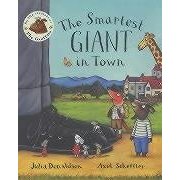
p(a). I enjoyed Tales of Acorn Wood...they were small and had dressed-up animals. And I liked drawing the world in which 'The Smartest Giant in Town' lives.


</div>


<div class="Book-of-the-term">
<div class="top-ten">
<span class="mt-enclosure mt-enclosure-image"><img alt="btn_tiddler_thumb.jpg" src="http://intl.transitionelement.com/scholastic/read-me/btn_tiddler_thumb.jpg" width="106" height="150" class="mt-image-left" style="float: left; margin: 0 0 20px 20px;"/></span>


p(intro). For a fun class activity using Tiddler click "here":http://bookfairs.scholastic.co.uk/images/bookfairs/book_talk_notes/btn_tiddler.pdf


</div>

]]>
    </content>
</entry>

<entry>
    <title> Problem Solved </title>
    <link rel="alternate" type="text/html" href="http://intl.transitionelement.com/scholastic/read-me/2007/09/post.html" />
    <id>tag:intl.transitionelement.com,2007:/scholastic/read-me//1.20</id>

    <published>2007-09-03T11:28:52Z</published>
    <updated>2007-09-13T12:34:12Z</updated>

    <summary>The Scholastic Book Fair Team based in Coventry know all about how to create the perfect Book Fair! The staff spend every day helping organisers like you, so they&apos;re just the people to advise on common questions and problems. We...</summary>
    <author>
        <name>Claire Dowse</name>
        
    </author>
    
    
    <content type="html" xml:lang="en" xml:base="http://intl.transitionelement.com/scholastic/read-me/">
        p(intro). The Scholastic Book Fair Team based in Coventry know all about how to create the perfect Book Fair! The staff spend every day helping organisers like you, so they&apos;re just the people to advise on common questions and problems. We asked six members of the team to answer some of the most frequently-asked questions

        <![CDATA[<div class = "problem-solved">
<span class="mt-enclosure mt-enclosure-image"><img alt="Carol McConkey.jpg" src="http://intl.transitionelement.com/scholastic/read-me/Carol%20McConkey.jpg" width="150" height="109" class="mt-image-left" style="float: left; margin: 0 20px 20px 0;"/></span>


**1.	What prices do the books start at, and what is the average price on the cases?**
Book Fair books start from just £1.50. With 72% of the range costing less than £4.99, we try to make sure each fair has plenty to suit every budget.
(Maria Demetrio)


</div>

<div class = "problem-solved">
<span class="mt-enclosure mt-enclosure-image"><img alt="Darren.jpg" src="http://intl.transitionelement.com/scholastic/read-me/Darren.jpg" width="206" height="200" class="mt-image-right" style="float: right; margin: 0 0 20px 20px;"/></span>

**2.	What advantage is there to having more than one Book Fair in the same school year?**
Having more than one Book Fair per year is really growing in popularity. You can earn up to 60% book commission per fair, so having two fairs is a good chance to boost your commission. Many schools mirror their takings in the second Book Fair, which means double the number of free books. 

A second Book Fair also gives you a second chance to hold book-related events Lots of schools hold their two fairs alongside parents' evenings to encourage parents to get involved. 

Finally, because Scholastic changes the book range twice a year, in September and January, holding two Book Fairs means you never miss out on the chance to see newly published books and exclusive offers which are only available through Scholastic.
 (DK)

</div>
<div class = "problem-solved">
<span class="mt-enclosure mt-enclosure-image"><img alt="Lisa.jpg" src="http://intl.transitionelement.com/scholastic/read-me/Lisa.jpg" width="213" height="200" class="mt-image-left" style="float: left; margin: 0 20px 20px 0;"/></span>
**3.	What time will be the Book Fair be delivered/collected?**
Book Fairs are usually delivered and collected between 8am and 4pm, except on the rare occasions when events beyond our control, such as road traffic accidents, prevent this. 
**Lisa Drennen, Telesales Co-ordinator, South East Sales Team**
</div>

<div class = "problem-solved">
<span class="mt-enclosure mt-enclosure-image"><img alt="Carol McConkey.jpg" src="http://intl.transitionelement.com/scholastic/read-me/Carol%20McConkey.jpg" width="150" height="109" class="mt-image-left" style="float: left; margin: 0 20px 20px 0;"/></span>

**4.	How do I recruit volunteers to help me?**
We supply a poster in your planning kit which you can use to advertise for volunteers. Another handy idea is to enlist the help of the PTA - you might be surprised at how keen parents are to get involved. Or how about running the Book Fair as a class project? Children are great Book Fair helpers and love having the responsibility for getting the Book Fair ready. 
**Carol McConkey, Manager, N. Ireland Sales Team.**

</div>

**5.	Can I accept book tokens at my Book Fair?**
Yes. Scholastic accept National Book Tokens and World Book Day tokens, but not gift vouchers redeemable only at a stated shop. (RL)

**6.	Where do I send my commission order?**
As from this autumn term, commission orders can be placed online with FREE postage and packing. 

You can still telephone or post your commission orders to us, but they will incur a £4.95 P&P charge.  Telephone 0800 212281 or post orders to Scholastic Book Fairs, Dolomite Avenue, Coventry Business Park, Coventry, CV5 6UE. (JC)
]]>
    </content>
</entry>

<entry>
    <title>Welcome to our summer issue of read me</title>
    <link rel="alternate" type="text/html" href="http://intl.transitionelement.com/scholastic/read-me/2007/08/welcome-to-our-summer-issue.html" />
    <id>tag:intl.transitionelement.com,2007:/scholastic/read-me//1.10</id>

    <published>2007-08-28T09:34:35Z</published>
    <updated>2007-08-29T14:26:04Z</updated>

    <summary> W elcome to our summer issue of read me - and lots of new opportunities for reading. Flopping down on a sunny beach or lazing under a tree just isn&apos;t everything it could be without a great book! Luckily...</summary>
    <author>
        <name>Dan Eastwell</name>
        
    </author>
    
    
    <content type="html" xml:lang="en" xml:base="http://intl.transitionelement.com/scholastic/read-me/">
        <![CDATA[<span class="mt-enclosure mt-enclosure-image"><img alt="kate wilson" src="http://intl.transitionelement.com/scholastic/read-me/test_images/kate_wilson.jpg" width="56" height="62" class="mt-image-right" style="float: right; margin: 0 0 20px 20px;"/></span>

p. %(cap)W% elcome to our summer issue of read me - and lots of new opportunities for reading. Flopping down on a sunny beach or lazing under a tree just isn't everything it could be without a great book! Luckily this term's **_read me_** is full of inspiring ways to keep your school reading all summer long. ]]>
        <![CDATA[

p. On page 20 you'll find a feature on the Book of the Term, _Peter Pan in Scarlet_. I love this book! Written to celebrate the 100-year anniversary of Peter Pan, it's an exclusive title for Scholastic Book Fairs and an official sequel by Geraldine McCaughrean, the truly brilliant award-winning author of another favourite,
_The Kite Rider_. To give you an idea of just how good it is, the author won the right to pen the sequel in a competition entered by over 200 top writers.

p. Are you getting ready for a summer Book Far? Make the most of it with our brilliant guide to Summer Themes. This _**read me**_ we've also got a special article on how to get pupils involved - just the way to spread the workload and make children feel engaged and responsible! Finally, if the mere thought of books gets you all steamed up with excitement, turn to page 4-5 for the inside story on how a book is made.

Have a great summer!
<span class="mt-enclosure mt-enclosure-image"><img alt="kate_wilson_sig.jpg" src="http://intl.transitionelement.com/scholastic/read-me/test_images/kate_wilson_sig.jpg" width="149" height="44" class="mt-image-left" style="margin: 0 20px 20px 0;"/></span>


Kate Wilson, Group MD]]>
    </content>
</entry>

<entry>
    <title>Beware! Killer Tomatoes!</title>
    <link rel="alternate" type="text/html" href="http://intl.transitionelement.com/scholastic/read-me/2007/08/beware-killer-tomatoes.html" />
    <id>tag:intl.transitionelement.com,2007:/scholastic/read-me//1.18</id>

    <published>2007-08-28T09:33:10Z</published>
    <updated>2007-08-29T15:46:30Z</updated>

    <summary> Jeremy Strong has done it again! Another humorous, light-hearted tale that is sure to tickle the fancy of many a young reader. Jeremy Strong chats to read me about childhood scrapes, nearly killing old men by accident and keeping...</summary>
    <author>
        <name>Dan Eastwell</name>
        
    </author>
    
        <category term="Book news" scheme="http://www.sixapart.com/ns/types#category" />
    
    
    <content type="html" xml:lang="en" xml:base="http://intl.transitionelement.com/scholastic/read-me/">
        <![CDATA[<span class="mt-enclosure mt-enclosure-image"><img alt="killer_tomatoes.gif" src="http://intl.transitionelement.com/scholastic/read-me/test_images/killer_tomatoes.gif" width="194" height="80" class="mt-image-right" style="float: right; margin: 0 0 20px 20px;"/></span>

p(intro). Jeremy Strong has done it again! Another humorous, light-hearted tale that is sure to tickle the fancy of many a young reader. Jeremy Strong chats to read me about childhood scrapes, nearly killing old men by accident and keeping in touch with today's children]]>
        <![CDATA[p. %(cap)T% he inspiration for this book came from several different ideas. Lots of it is based in childhood
memories of the scrapes I used to get into. I always seemed to have the odd broken bone and my mother
was forever carting me off to hospital to get me stitched up. I vividly remember the nurses being fed up with me because with so many accidents I'd filled up my record card and they had to start a second one for me! So my own childhood provided the background for the story.

p. 'Secondly, was my experience of hospitals. Despite all my scrapes, I never had to stay in hospital as a child (oh, except when I was three, I'd fallen out of a window and landed on my head - but I don't remember much about that!). But as an adult I've had to stay a couple of nights and it is so very boring. I knew it must be the same for children in hospital so I started to visit the children's ward at the Royal United Hospital in Bath to talk to the patients. Most of them can't go very far, they have to stay on the ward, or sometimes are
restricted to their bed (which means they can't escape me!). I take in some books to read to them, or just chat - anything to take their minds off being in hospital for a while, to put a smile on their face and get them laughing. So, the setting for Beware! Killer Tomatoes comes from this. 

p. 'The plot also came from a childhood experience. As a young boy I was always out and about on my bicycle and one day I knocked over an adult. I'm ashamed to say, I was too scared to stop. At the time I thought he may have been badly hurt - he may even have been dead. I remember being very concerned
and feeling terribly guilty. I was worried and anxious that the police might come knocking on the door. I experienced the same emotions that Jack has as he waits in hospital and dreads the worst. Of course, I found out later that my victim had staggered off home and was fine, although no doubt complaining bitterly about me!

bq(call-out). &#8216; Lots of the book is based in memories of childhood scrapes. &#8217;

<div class="box-yellow">

<span class="mt-enclosure mt-enclosure-image"><img alt="jeremy_strong_1.jpg" src="http://intl.transitionelement.com/scholastic/read-me/test_images/jeremy_strong_1.jpg" width="120" height="150" class="mt-image-left" style="float: left; margin: 0 0px 20px 0;"/></span>

<span class="mt-enclosure mt-enclosure-image"><img alt="jeremy_strong_2.jpg" src="http://intl.transitionelement.com/scholastic/read-me/test_images/jeremy_strong_2.jpg" width="114" height="150" class="mt-image-left" style="float: left; margin: 0 0px 20px 0;"/></span>

<span class="mt-enclosure mt-enclosure-image"><img alt="jeremy_strong_3.jpg" src="http://intl.transitionelement.com/scholastic/read-me/test_images/jeremy_strong_3.jpg" width="128" height="151" class="mt-image-left" style="float: left; margin: 0 0px 20px 0;"/></span>

<span class="mt-enclosure mt-enclosure-image"><img alt="jeremy_strong_4.jpg" src="http://intl.transitionelement.com/scholastic/read-me/jeremy_strong_4.jpg" width="121" height="151" class="mt-image-left" style="float: left; margin: 0 0px 20px 0;"/></span>

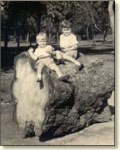
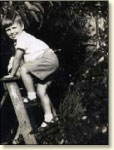
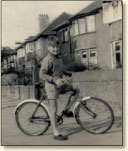
p(clear). Just like Jack in _Beware! Killer Tomatoes_, Jeremy once thought he may have badly injured someone and dreaded the knock on the door from the police. He had accidentally knocked someone over with his bike. With an adventurous spirit from a very young age, Jeremy was always getting into scrapes.

</div>

<div class="review">

h2. Reviews

<span class="mt-enclosure mt-enclosure-image"><img alt="reviewer01.jpg" src="http://intl.transitionelement.com/scholastic/read-me/test_images/reviewer01.jpg" width="55" height="70" class="mt-image-right" style="float: right; margin: 0 0 20px 20px;"/></span>

p. %(reviewer)Sam King, aged 9:% I have really enjoyed reading Beware! Killer Tomatoes by Jeremy Strong and would like to read other books by this author. This book really made me chuckle especially where Maisie says, "Cross my heart or die from a fart!"

p. Briefly, this story is about a boy called Jack who is trying to escape from hospital but he can't without injuring himself. This book is really funny and easy to read. I also really liked the illustrations. I would definitely recommend this book for anyone from age 9 - 12!

p(rating stars5). Sam's rating: 

bq(call-out red). This book really made me chuckle. I would like to read other books by this author.

<span class="mt-enclosure mt-enclosure-image"><img alt="reviewer02.jpg" src="http://intl.transitionelement.com/scholastic/read-me/test_images/reviewer02.jpg" width="53" height="67" class="mt-image-left" style="float: left; margin: 0 20px 20px 0;"/></span>

p. %(reviewer)Scott Carlin, aged 10:% I had lots of fun reading this book, I especially enjoyed the 'rude' bits in the Bling House. I thought the illustrations were funny and helped me to enjoy the story. The book is about a boy who thinks he has killed a man by knocking over a pile of tinned tomatoes in the supermarket. He breaks his leg when he's cycling away from the shop because he peddles really fast, doesn't look where he's going and hits a parked car. He ends up in hospital and is really worried that the police are going to
arrest him for murder! I think that anyone in Key Stage 2 would enjoy this book.

p(rating stars4). Scott's rating: 


</div>
]]>
    </content>
</entry>

<entry>
    <title>Inspiration in the rainforest</title>
    <link rel="alternate" type="text/html" href="http://intl.transitionelement.com/scholastic/read-me/2007/08/inspiration-in-the-rainforest.html" />
    <id>tag:intl.transitionelement.com,2007:/scholastic/read-me//1.15</id>

    <published>2007-08-24T15:50:27Z</published>
    <updated>2007-08-29T12:43:41Z</updated>

    <summary>The read me investigation team report from the depths of a Reading Rainforest in Cheshire to bring you some inspirational ideas for using this term&apos;s rainforest theme in your own school....</summary>
    <author>
        <name>Dan Eastwell</name>
        
    </author>
    
        <category term="Steps to success" scheme="http://www.sixapart.com/ns/types#category" />
    
    
    <content type="html" xml:lang="en" xml:base="http://intl.transitionelement.com/scholastic/read-me/">
        p(intro). The read me investigation team report from the depths of a Reading Rainforest in Cheshire to bring you some inspirational ideas for using this term&apos;s rainforest theme in your own school.
        <![CDATA[<div class="box-red">

h2. Letting parents know

p. If parents come into the classroom to drop or collect their children then Y1 teacher, Miss Hay, has an excellent idea for attracting parents attention. 'A few days before the Book Fair arrives I put a big reminder on my interactive whiteboard which parents can't miss. I give it a rainforest feel to reinforce the theme and do a daily countdown to raise anticipation:

p(red). Only 3 days to go!;
The Book Fair will be here in 2 days!;
Nearly here - just 1 day before the Book Fair arrives!;
Hooray!, The Book Fair is in the Hall, open today from 3.15pm to 4pm!'

p. For parents who don't come into the classrooms, you can do something similar on a flip chart to display in the playground.

</div>]]>
    </content>
</entry>

<entry>
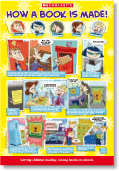
    <title>How a book is made</title>
    <link rel="alternate" type="text/html" href="http://intl.transitionelement.com/scholastic/read-me/2007/08/how-a-book-is-made.html" />
    <id>tag:intl.transitionelement.com,2007:/scholastic/read-me//1.3</id>

    <published>2007-08-24T15:34:44Z</published>
    <updated>2007-08-29T14:18:16Z</updated>

    <summary> Take a look behind the scenes to discover how much really goes on in the process of making a book - it may be more than you imagined......</summary>
    <author>
        <name></name>
        
    </author>
    
        <category term="Regulars" scheme="http://www.sixapart.com/ns/types#category" />
    
    
    <content type="html" xml:lang="en" xml:base="http://intl.transitionelement.com/scholastic/read-me/">
        <![CDATA[<span class="mt-enclosure mt-enclosure-image"><a href="http://intl.transitionelement.com/scholastic/read-me/images/book_reading.jpg"><img alt="book_reading.jpg" src="http://intl.transitionelement.com/scholastic/read-me/assets_c/1.7ff4df27f26b3c6831ca5b4434372ddb29ab890a.jpg" height="100" class="mt-image-right" style="float: right; margin: 0 0 20px 20px;"/></a></span>

p(intro). Take a look behind the scenes to discover how much really goes on in the process of making a book - it may be more than you imagined...]]>
        <![CDATA[p. %(cap)T% hink of your favourite children's book. What makes it special - a memorable character, the exciting plot, the richness of the language or the fun or beauty of the illustrations? Most probably, it is the perfect combination of all these features.

p. Very often, the most successful children's books seem the simplest and you'd be forgiven for thinking that the author and illustrator have sat down one day and poured it all out onto the page just as it is.

bq(call-out). "It can take a couple of years from the start of an author's idea to the finished book arriving in the bookshop."

p. That's often the way children think it's done but making a book takes a bit more than that! There are usually a number of people involved and it can take a couple of years from the start of an author's idea to the finished book arriving in the bookshop.

h2. Using the poster

p. This month's fabulous poster is a superb resource to use with children, who are always intrigued to know just how a book is made. The following notes provide you with more details of each stage to help you in your discussions with the children. Why not use this feature to help you create a class book, and let the children appreciate that that is a lot more to making a book than writing a story!

<span class="mt-enclosure mt-enclosure-image"><img alt="creating_a_book_02.gif" src="http://intl.transitionelement.com/scholastic/read-me/creating_a_book_02.gif" width="165" height="161" class="mt-image-right" style="float: right; margin: 0 0 20px 20px;"/></span>

h2. Producing your own masterpiece

p. Perhaps they would like to choose their role according to their strengths: some may be confident at writing, others may make good critics (the publisher) or reviewers, those with creative talents may like to create the artwork or design the pages of the book and the covers, and look out for children with business skills to promote the book to potential readers (that means everyone in school, including governors; families; local pre-schools and any local business partners).  There may even be a business that would print some copies of your finished book.

<div class="box-blue">

<span class="mt-enclosure mt-enclosure-image"><img alt="creating_a_book_03.gif" src="http://intl.transitionelement.com/scholastic/read-me/creating_a_book_03.gif" width="59" height="80" class="mt-image-right" style="float: right; margin: 0 0 20px 20px;"/></span>

h2. Step by Step to the Poster

h3. Step 1

Books start their life in different ways, but usually an author has an idea for a story and writes a manuscript. Some authors can take a long, long time to write, for others, it's quite a quick process. And authors have individual ways of working.

Jacqueline Wilson, for example, always buys herself an expensive Italian notebook to write ideas for a new book, others jot ideas on Post-it Notes, while some use a computer. Eventually, it will be ready to send to a publisher.

h3. Step 2

Publishers receive many manuscripts, and they don't all get accepted for publication. There are many considerations to take into account. For a children's story book the main characters are really important: are the characters interesting or fun - will readers care enough about them to want to keep reading?; does the story have a beginning, middle and end?; if it is to be an illustrated book, is there enough visual impact? The publisher also has to think about their market - is it suitable for their range of books?; will it sell in other countries? Meetings with the sales team, marketing team and the rights team are held to discuss each book proposal.

h3. Step 3

When the publisher has decided to accept the story, a contract is written which is signed by both the publisher and the author. The contract is a promise from the publishing company that it will manufacture, publish and sell the book and that the author will  be paid a royalty (a percentage for each  copy of the book that is sold).

h3. Step 4

An illustrator is commissioned. This role varies, depending on the style of the book. For picture books, an illustrator has a lot of involvement and can add a great deal to the text. In the most successful picture books, the images tell the reader as much as the words. In fiction books for older children,  the cover image is very important as this has to attract the children's attention, make them want to pick it up and find out more. 

h3. Step 5

<span class="mt-enclosure mt-enclosure-image"><img alt="creating_a_book_04.gif" src="http://intl.transitionelement.com/scholastic/read-me/test_images/creating_a_book_04.gif" width="60" height="77" class="mt-image-left" style="float: left; margin: 0 20px 20px 0;"/></span>The sales, marketing and publicity teams kick into action! A book doesn't sell on its own - people need to know about it. The sales team sell the book to bookshop owners, librarians, book clubs and book fairs. The marketing team thinks of ways to promote the book and the publicity team makes sure the book is talked about and reviewed. The author may be asked to do interviews in newspapers and magazines, on radio and television. Book reviewers will be sent copies to write reviews in the press and on websites.

h3. Step 6

The graphic designer works on a computer program to make the page layouts. The pictures and text are put together. There are lots of decisions about the size and shape  of the book, the font and size for the type, the sizes of the images, the use of background colours or whether to use techniques such as lift-the-flaps or to  have features such as glitter or cut-outs.

h3. Step 7

Proofs are created which are checked and double-checked. Throughout the whole process checks will have been taking place but this is the last chance to make any corrections. The text needs to be checked: are there any spelling mistakes?; does it  make sense?; is it consistent? The images need to be checked: are they the right colours?; are they in the right place? Does it all fit together properly? Are the page numbers right?

h3. Step 8

When everyone is happy, the printer begins his job. The final printing plates are made and the pagination is worked out. At last the printing press is ready to roll. The pages of the books are printed on one big sheet, on both sides. If the book is being printed in different languages, then the printing plates for the text are changed and printed again. The sheets are then folded, gathered and trimmed. The cover is attached and at last the book is made! Thousands of copies of the book may be printed at one time.

h3. Step 9

<span class="mt-enclosure mt-enclosure-image"><img alt="creating_a_book_05.gif" src="http://intl.transitionelement.com/scholastic/read-me/test_images/creating_a_book_05.gif" width="146" height="176" class="mt-image-left" style="float: left; margin: 0 20px 20px 0;"/></span>

Today, books are printed all over the world, many in the Far East, so the books often have a long journey from the printers to the bookshop. It may take six weeks for the books to travel by boat from the printer to the docks in Britain. From the docks they are loaded onto lorries and taken to the publisher's warehouse. Once the customer puts in their order, the books are then despatched to their warehouse, before going on to the bookshop or library.

h3(clear). Step 10

The book is displayed in the bookshop  or library, where it catches lots of attention.

At last! The book is being enjoyed at bedtime -- all the hard work was worth it! The author may be asked to do interviews in newspapers and magazines, on radio and television. Book reviewers will be sent copies of the book to write reviews in the press and on websites. Display the poster for all the children to see and discuss each step. They will be amazed to see how many processes are involved in making a book -- and how long it takes!
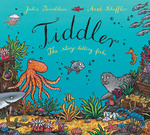
</div><!-- end div box-blue -->

<div class="article-footer">
<span class="mt-enclosure mt-enclosure-image"><img alt="how_a_book_poster.gif" src="http://intl.transitionelement.com/scholastic/read-me/test_images/how_a_book_poster.gif" width="119" height="171" class="mt-image-left" style="float: left; margin: 0 20px 20px 0;"/></span>

p. Display the poster for all the children to see and discuss each step. They will be amazed to see how many processes are involved in making a book - and how long it takes!
</div>]]>
    </content>
</entry>

<entry>
    <title>Scholastic recommends...</title>
    <link rel="alternate" type="text/html" href="http://intl.transitionelement.com/scholastic/read-me/2007/08/scholastic-recommends.html" />
    <id>tag:intl.transitionelement.com,2007:/scholastic/read-me//1.12</id>

    <published>2007-08-24T15:10:14Z</published>
    <updated>2007-08-28T15:12:02Z</updated>

    <summary>This term&apos;s Scholastic Book Fair cases are simply brimming with unmissable books. But for a preview of our book selectors&apos; top picks, look no further than Scholastic recommends!...</summary>
    <author>
        <name>Dan Eastwell</name>
        
    </author>
    
        <category term="Regulars" scheme="http://www.sixapart.com/ns/types#category" />
    
    
    <content type="html" xml:lang="en" xml:base="http://intl.transitionelement.com/scholastic/read-me/">
        p(intro). This term&apos;s Scholastic Book Fair cases are simply brimming with unmissable books. But for a preview of our book selectors&apos; top picks, look no further than Scholastic recommends!
        <![CDATA[<div class="recommended-book">

<span class="mt-enclosure mt-enclosure-image"><img alt="book_explore_sharks.gif" src="http://intl.transitionelement.com/scholastic/read-me/test_images/book_explore_sharks.gif" width="108" height="105" class="mt-image-right" style="float: right; margin: 0 0 20px 20px;"/></span>

h2. Let's Explore Sharks

p. *(£6.99)*
Age 3+ Case: Welcome to Reading

p. Build on children's enduring fascination with sharks, the savage hunters of the deeps! This fun kit combines simple non-fiction reading with a host of snappy crafts to fill spare hours.

</div>

<div class="recommended-book">

<span class="mt-enclosure mt-enclosure-image"><img alt="book_rumble_jungle.gif" src="http://intl.transitionelement.com/scholastic/read-me/test_images/book_rumble_jungle.gif" width="167" height="188" class="mt-image-left" style="float: left; margin: 0 20px 20px 0;"/></span>

h2. Rumble in the Jungle

p. Giles Andreae and David Wojtowycz

p. *(£5.99)*
Age 3+ Case: Welcome to Reading

p. There's a rumble in the jungle. There's a whisper in the trees... The animals are waking up. Will you join them, please? This is a wonderful book to get little voices piping up. Act out the rhymes, or use them to learn all about jungle creatures!

</div>

<div class="recommended-book highlighted-book">

<span class="mt-enclosure mt-enclosure-image"><img alt="book_cheese_tomato.gif" src="http://intl.transitionelement.com/scholastic/read-me/test_images/book_cheese_tomato.gif" width="168" height="174" class="mt-image-left" style="float: left; margin: 0 20px 20px 0;"/></span>

h2. A Cheese and Tomato Spider

p. Nick Sharratt 

p. *(£4.99)*
Age 3+ Case: Welcome to Reading

p. Get everyone excited about reading with a feast of imaginative combinations. Just mix and match the split panels. What do you get? Can you spot the cheese and tomato spider? What about the zoomy fish on wheels? Nick Sharratt has delivered the goods yet again with this brilliant interactive book, perfect for getting little fingers busy and thinking caps on!

</div>

<div class="competition">

h2. Competition

p. We've got 10 signed copies of Jacqueline Wilson's latest title, Jacky Daydream, up for grabs! For your chance to win a free copy, simply email your name and the address of your school to "carriem@scholastic.co.uk":mailto:carriem@scholastic.co.uk by 29 June 2007. 10 lucky winners will be chosen on 2 July 2007. Good luck!

</div>]]>
    </content>
</entry>

<entry>
    <title>Get wild in libraries this summer</title>
    <link rel="alternate" type="text/html" href="http://intl.transitionelement.com/scholastic/read-me/2007/08/get-wild-in-libraries-this-sum.html" />
    <id>tag:intl.transitionelement.com,2007:/scholastic/read-me//1.7</id>

    <published>2007-08-24T15:05:06Z</published>
    <updated>2007-08-24T15:39:19Z</updated>

    <summary> Big Wild Read is the thrilling theme for the annual Summer Reading Challenge which runs in public libraries through the summer holidays, and is supported by leading children&apos;s publishers. Children borrow and read up to six books, collecting stickers...</summary>
    <author>
        <name>Dan Eastwell</name>
        
    </author>
    
        <category term="Round-up and news" scheme="http://www.sixapart.com/ns/types#category" />
    
    
    <content type="html" xml:lang="en" xml:base="http://intl.transitionelement.com/scholastic/read-me/">
        <![CDATA[<div class="article-item">

<span class="mt-enclosure mt-enclosure-image"><img alt="big_wild_read.gif" src="http://intl.transitionelement.com/scholastic/read-me/test_issue/big_wild_read.gif" width="92" height="111" class="mt-image-left" style="float: left; margin: 0 20px 20px 0;"/></span>

p. Big Wild Read is the thrilling theme for the annual Summer Reading Challenge which runs in public libraries through the summer holidays, and is supported by leading children's publishers. Children borrow and read up to six books, collecting stickers for each book they read. At the end of the summer they get
a certificate recording their achievement, and a medal if they have completed the challenge. If you'd like to  make sure your children keep reading during the summer holidays, support the challenge by promoting
it in school. Promotional materials can be "downloaded from website":www.readingagency.org.uk/projects/children/reading_challenge.html.

p. Scholastic's Reading Around the World Campaign, featuring some great competitions, also aims to encourage children to read this summer. See pages 16 - 17 for more details or "log onto the website":www.scholastic.co.uk.

</div>]]>
        
    </content>
</entry>

</feed>